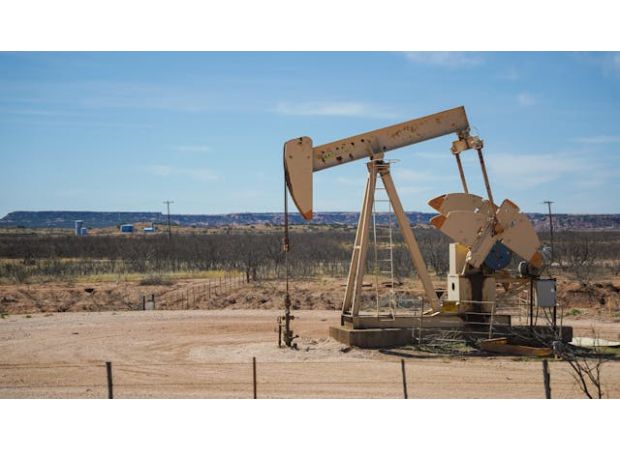
When it comes to the price of a barrel of oil, politicians in Alberta are quick to either take credit or point fingers. They often blame the federal government or the previous administration for low prices, citing regulations, policies, or even ideologies as the cause. On the other hand, high prices are seen as a result of good governance on their part.
However, the truth is that both Canada and Alberta are at the mercy of global markets and powers that are largely beyond their control. Factors such as stock markets, political upheaval, election cycles, and even war can greatly impact the price of oil. And let's not forget the basic principles of supply and demand.
That's why the recent move by the U.S. to take control of Venezuela's oil reserves has caused quite a stir in Canada. With the largest oil reserves in the world, Venezuela has always been a major player in the global oil market. But with the country's rulers nationalizing the industry and driving it into the ground, its once thriving infrastructure has been left in ruins and its experts have fled.
Furthermore, the U.S. has imposed sanctions on Venezuela since 2019, limiting its role in the global market even further. Meanwhile, Alberta has been steadily increasing its oil production. This has created a delicate balance between supply and demand, which greatly affects the price of oil.
Speaking of supply, let's take a look at the numbers. Venezuela has an estimated 300 billion barrels of oil reserves, while Alberta has 159 billion barrels. However, due to its tumultuous history and current sanctions, Venezuela has not been able to fully utilize its resources in recent years. On the other hand, Alberta has been actively increasing its production.
So, what exactly is supply and demand? Put simply, when there is a high demand for oil and limited supply, the price goes up. And when there is an excess supply and low demand, the price goes down. This is exactly what happened at the start of the COVID-19 pandemic when the demand for oil plummeted due to people staying at home, causing prices to drop significantly.
Currently, there is an oversupply of oil in the global market, which has led to a decrease in prices. And with the demand for oil expected to decline in the coming years, the price is not likely to see a significant increase unless governments take action to reduce carbon emissions.
In Canada, major oil companies are being cautious and cutting costs. They are not investing in new projects and are instead focusing on keeping their expenses in check. Some have even reduced their workforce while offering dividends to shareholders.
It's worth noting that there are different types of oil, and their prices can vary across regions. In Canada, the main commodity is heavy oil from the oilsands, but there are also lighter varieties. On January 6, just days after the U.S. attack on Venezuela, the price of American oil was around $78 per barrel, while in Canada, it was approximately $58 per barrel. This difference in price is known as the price differential, and it has been a major concern for Canadian producers in the past.
However, thanks to the construction of the Trans Mountain pipeline expansion, Canada can now sell more oil on the global market rather than relying solely on the U.S. as a customer. This has helped reduce the price differential in recent years. Before this, Canadian producers had to sell their oil at a discounted price to U.S. refineries, which had an abundance of supply and could afford to be selective, especially with the surge in oilsands production.
But there are fears that the price differential could increase again if sanctions on Venezuelan oil are eased and more crude oil starts to flow. This could potentially reverse the progress made by the Trans Mountain expansion. Only time will tell how the global oil market will shape up in the future, but for now, it's a delicate balancing act for Canada and Alberta.
When it comes to the fluctuating price of a barrel of oil, politicians in Alberta are quick to either take credit or place blame. They often point fingers at Ottawa or the previous government, citing their regulations, policies, or ideologies as the cause for low prices. On the other hand, high prices are seen as a result of wise governance. However, the reality is that Canada, and specifically Alberta, have little control over the global market and the powerful forces that influence it. Factors such as stock markets, political turmoil, election cycles, and even war can all impact the price of oil. And let's not forget the basic principles of supply and demand.
The recent U.S. attack on Venezuela and their attempt to assert control over their oil reserves has sparked concern in Canada. This South American country holds the largest oil reserves in the world, with an estimated 300 billion barrels. In comparison, Alberta has 159 billion barrels. However, Venezuela's decision to nationalize their oil and gas industry in 2007, pushing out most foreign companies, has resulted in a decline in production and infrastructure. On top of that, the country has been under U.S. sanctions since 2019. This has limited their impact on the global oil market, while Alberta has been steadily increasing their production.
The key here is supply and demand. When there is high demand for oil and limited supply, the price goes up. And when there is excess supply and low demand, the price goes down. For instance, at the start of the COVID-19 pandemic, when people were staying at home and demand for oil decreased, Saudi Arabia flooded the market with their supply, causing prices to plummet. Currently, there is an oversupply of oil in the global market, further depressing prices.
The demand for oil is also expected to decline in the future, but there is debate over when this will happen. The International Energy Agency predicts that if current government policies remain in place, demand will continue to rise until 2050. However, if governments take more action to reduce carbon emissions, demand could decline sooner. This uncertainty has made oil producers cautious, focusing on cutting costs rather than investing in new projects. In Canada, major oil companies are also reducing their workforce while trying to appease shareholders with dividends.
It's important to note that not all oil is the same, and therefore, prices can vary across different regions and types of oil. In Canada, the main commodity is heavy oil from the oilsands, but there are also lighter varieties. On January 6th, after the U.S. attack on Venezuela, a barrel of American oil was selling for around $78, while a barrel in Canada was going for about $58. This difference in price is known as the price differential and has been a major concern for Canadian oil producers in the past. However, in recent years, this gap has decreased, thanks in part to the construction of the Trans Mountain pipeline expansion. This has allowed Canada to sell more oil on the global market rather than relying solely on the U.S. as a customer, which has helped to increase prices.
Before this expansion, Canadian producers would often sell oil at a discount to U.S. refineries, who had plenty of supply and could afford to be selective, especially as oilsands production grew. However, with the potential for more crude oil to flow from Venezuela if sanctions are eased, there is a risk that this price differential could widen again, negating the gains from the Trans Mountain expansion. The future of Canada's oil industry is uncertain, as it is largely at the mercy of global markets and powers beyond its control.