
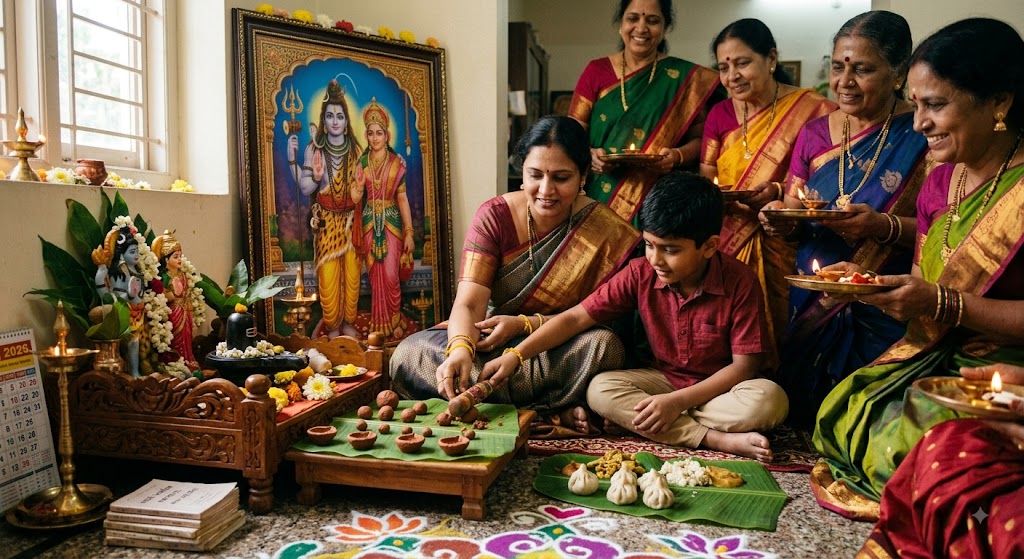

This is a sacred festival. Bhima Amavasya is celebrated in Karnataka and some parts of South India. The new moon of Ashadha Bahula is called Bhima Amavasya. This is the day when a Sati Shiromani brought back her deceased husband with the grace of Parvati-Parameshwara and gave him long life. It is also known as Pati Sanjeevini Vrata.
The names of this festival are: Jyoti Bhimeshwara Vrata, Deepa Sthamba Puja, Gandan Puja/Gandan Habba, and it is celebrated as Sati Sanjeevini Vrata.
Significance of the festival: The worship of Shiva and Parvati is the importance of this day. Married and unmarried people worship Shiva and Parvati and pray to God for the long life, health, success and happiness of the male members of the family. Unmarried girls pray for a good husband. Brothers and sisters pray for this.
In Shaivism: In the Shaivism of Karnataka, this day is believed to be the day when Shiva was pleased with Parvati's devotion and accepted her as his wife. In other sources, it is also mentioned as the birth day of Bhima in the Mahabharata or the day when he killed Bakasura.
Method of celebration: Women take a Mangal bath in the morning and observe a fast.
Kali Kamba/Deepa Stambha: Two red lamps are made as a representation of Shiva and Parvati, decorated with ash and sindoor and worshipped. Panchaloha or a picture is also used.
Yellow thread: A bracelet or a thread is tied.
Naivedya: Curry cake, fruit, milk, tambittu, etc. are offered to the god.
Married women worship their husband's feet. After marriage, this fast is usually observed for 9 years. A kadbu/coin is placed in a ball made of wheat or rice flour and the brothers or men of the house and children break it and take the coin and seek blessings. The next day, it is a common custom to place earthen lamps under the tulsi plant or melt it in water and pour it. This is a women's vrat and is a devotional ritual performed for the yogic well-being of the men of the family. In Kannada, it is called Aati Amavasya.
Necessary Puja Materials: Two clay Kali Kamba/Deepa Stambha, Shiva Parvati Chitta, Silver lamps, Rice grains, Yellow thread, Ghee, Oil wick, Naivediya with Karikadabu, Tambittu, Fruit, Banana, Coconut, Betel leaf, Areca etc. Bhima Amavasya is mainly celebrated by married women for the longevity, health, success and happiness of their husbands. This fast is a cultural ritual that celebrates the birth anniversary of Bhima, one of the Pandavas of the Mahabharata, and fosters family unity, devotion, and social harmony. It is believed that worshipping Shiva and Parvati brings prosperity, children, longevity, and peace. According to folklore, Bhima fought Yama and received the boon of health, longevity, and protection from premature death for those who fast on this day. On this Bhima Amavasya, let us all worship Shiva and Parvati and attain health, happiness, and prosperity.
Disclaimer: This article has been translated by xklsv.com using advanced AI-based translation tools. Please note that the use of AI for translation is still experimental and may not be 100% accurate. The original content is sourced from shakthidaily.info, and Shakthi Daily is not responsible or liable for any errors, omissions, or inaccuracies that may appear in the translated version, including spelling, grammar, or contextual misunderstandings.
If you come across any mistakes or inconsistencies in this translation, we kindly request you to report them by sending an email to [email protected]
Your feedback will help us improve the quality.
The image in this article has been generated using artificial intelligence and is intended for illustrative purposes only. It may not reflect real-world accuracy

Kodava Inter-Keri Badminton Tournament Gets Underway...
Read More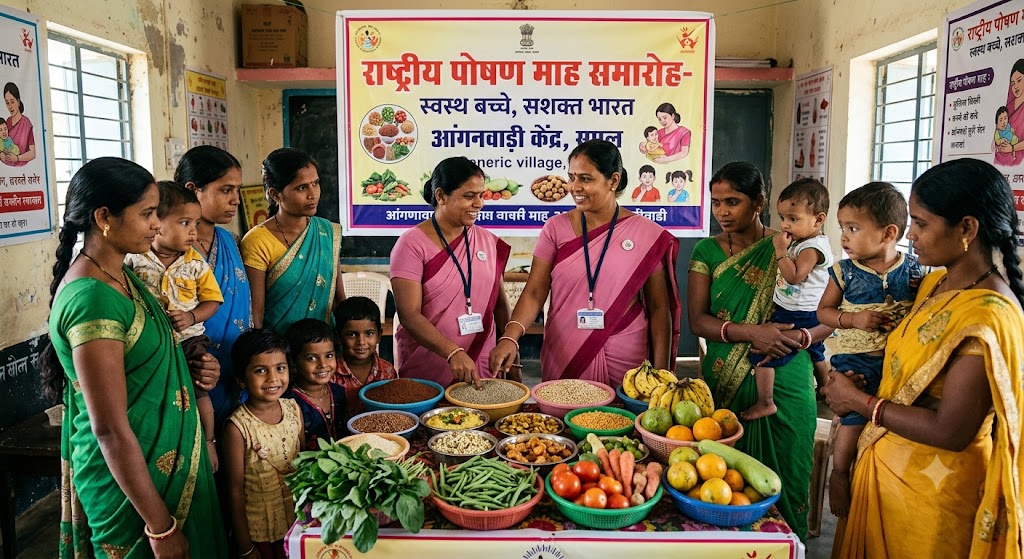
Poshan Month Celebrated at Harishchandrapura Anganwadi Centre...
Read More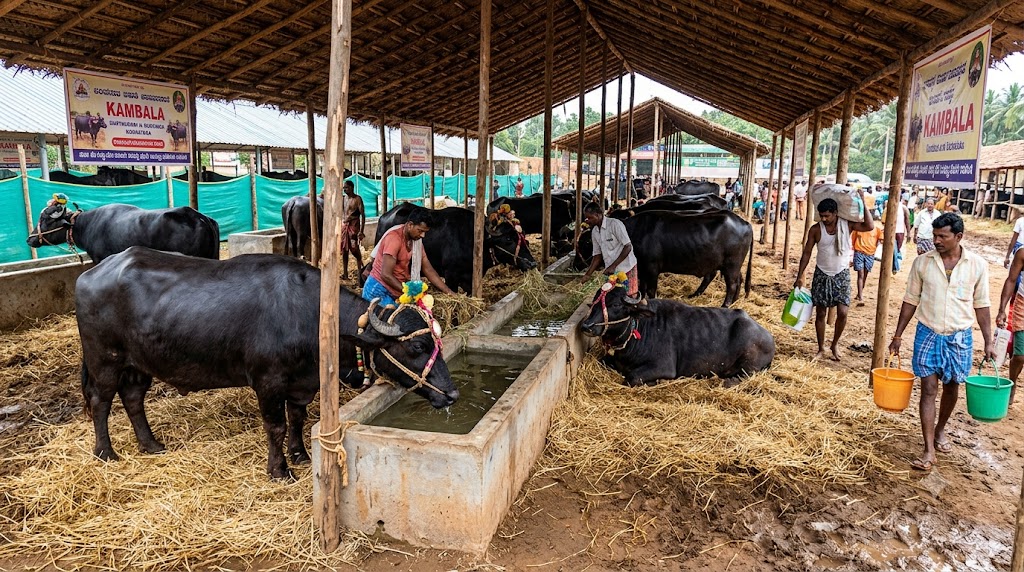
Preparations for Kambala Buffaloes’ Rest Stop Reviewed...
Read More
Forest Department Bans Mobile Phone Use During Safaris Across Karnataka, Including Nagarhole...
Read More