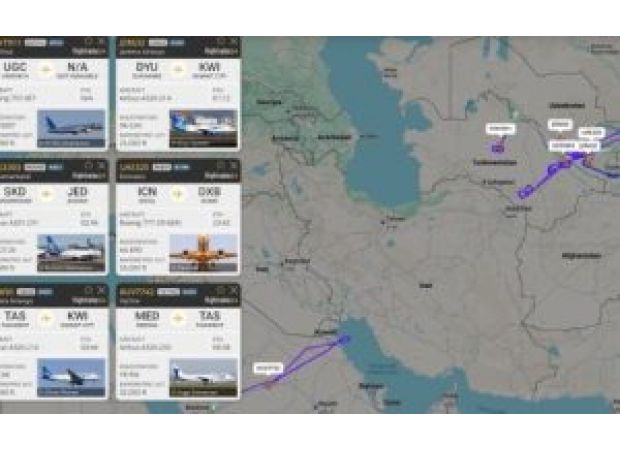
Airlines change flight routes due to temporary closure of Iran's airspace during heightened tensions with US.
Iran suddenly closed its airspace for several hours without explanation, causing flight diversions and raising tensions with the US amid nationwide protests.
The city of Dubai was abuzz with news of Iran's sudden closure of its airspace to commercial flights. The reason for this move was not immediately clear, but it was speculated that it was related to the ongoing tensions between Iran and the United States. The closure lasted for over four hours, causing a ripple effect on international flights that pass through the region.
Pilots were advised to divert their flights north or south of Iran, as it lies on a crucial East-West flight route. This was not the first time Iran had closed its airspace, as it had done so before during conflicts with Israel and Hamas. However, this time there were no signs of any immediate hostilities. Despite this, the closure had a significant impact on global aviation, as many airlines had to reduce or suspend their services.
The website SafeAirspace, which provides information on conflict areas and air travel, highlighted the potential risks of flying over Iran at this time. The situation could lead to heightened security measures or even missile launches, which could mistakenly target commercial flights. This was a valid concern, as Iran had previously misidentified a passenger plane as a hostile target, resulting in the tragic downing of Ukraine International Airlines Flight PS752.
The closure of Iranian airspace coincided with the evacuation of some personnel at a key U.S. military base in Qatar and a temporary halt on travel to military bases in Kuwait. This was in response to vague statements made by U.S. President Donald Trump, who hinted at possible action against Iran. However, it was not entirely clear what form this action would take.
In contrast, Iranian Foreign Minister Abbas Araghchi urged for a diplomatic solution to the tensions between the two countries. He acknowledged that while the U.S. and Iran have had a strained relationship, diplomacy was still a better option than war. This change in tone from both sides came after the Iranian judiciary chief called for swift punishment for the thousands of protesters who had been detained.
Activists expressed concerns that this could lead to a wave of executions, as the security forces had already killed over 2,600 people in their crackdown on the protests. This death toll was higher than any other protest or unrest in Iran in recent history, and it served as a reminder of the chaos that surrounded the country's 1979 revolution. As the tensions between Iran and the U.S. continued, the citizens of Dubai anxiously awaited any updates on the situation.