December 13th 2025.
Allison Hooker, the US Under Secretary of State for Political Affairs, recently visited India from 7-11 December. This visit came just a day after Russian President Putin left, causing many to take notice of the state of India-America bilateralism. The timing and purpose of Hooker's visit could be interpreted in two ways. Some believe that despite the ongoing trade tensions between the two countries, this visit was an effort to maintain the political and strategic ties between India and the US. Others speculate that it was a response to President Trump's concerns about Putin's presence in India, especially as he is currently trying to broker a ceasefire between Russia and Ukraine.
Trump's concerns also extend to China's growing military might and capabilities, which now rival those of the United States. In his first term, he made China his main rival, but at that time, there was no Russia-Ukraine war. This is why the Quad initiative was taken, as a way to counter China. The Quad has become the primary means of deepening the relationship between India and America, with a focus on defense interoperability, intelligence sharing, joint military exercises, and India's integration into US-led initiatives in areas such as space cooperation, critical minerals, semiconductor supply chains, and artificial intelligence. So, it is no surprise that after completing her business in New Delhi, Under Secretary Hooker also visited the Indian Space Research Organisation in Bengaluru.
The partnership between the US and India has steadily evolved since the late 1990s, following the revocation of sanctions against India after their nuclear test, and the landmark 2008 Civil Nuclear Agreement. Since then, cooperation between the two countries has expanded across various areas, including defense, technology, energy, and regional security. They have also increasingly aligned their strategic perspectives and approaches to the Indo-Pacific region.
This relationship is based on mutually beneficial economic opportunities in both countries, as well as strategic coordination, particularly in the Indo-Pacific, in response to China's rise and assertiveness. The most recent example of this was the bilateral agenda set by President Trump and Prime Minister Modi during their 2025 meeting. This agenda includes cooperation through the Quad, as well as initiatives in the Middle East and other global affairs.
The question now is whether Under Secretary Hooker's visit will help thaw the currently strained relationship between the US and India. During her visit, she met with senior Indian officials to discuss regional security, economic cooperation, and shared priorities in the Indo-Pacific. According to the US perspective, this visit is another step towards advancing President Trump's vision of a strong partnership between the US and India, as well as a free and open Indo-Pacific. From the US administration's point of view, this is a positive development.
However, India has been cautious and measured in its approach towards the US, primarily due to President Trump's unpredictable behavior and his surprising shift towards Pakistan. During her time in Bengaluru, Hooker also met with leaders in the space, energy, and technology sectors to foster innovation and research partnerships between the US and India, exploring opportunities for further cooperation. She stated that the US's goal is to deepen cooperation with India in multiple sectors while also supporting India's rise as a technology leader. She expressed her appreciation for Foreign Secretary Misri's continued partnership, as both countries work together to achieve shared objectives that benefit the American people and align with India's national goals.
Coinciding with Under Secretary Hooker's five-day visit, the new US Deputy Trade Representative, Rick Switzer, also arrived in India on December 10. According to briefings from the US Embassy, Switzer's visit was meant to familiarize himself with officials in the Indian central government.
On the day of Under Secretary Hooker's arrival, External Affairs Minister S Jaishankar shared his views on the Trump administration, stating that it operates differently from previous administrations, as each president has their own approach to the world. However, he expressed confidence that a balanced bilateral trade agreement could be reached between India and the US. He also reiterated India's red lines in negotiations, which are aimed at protecting the interests of farmers, workers, and small businesses. Jaishankar also noted that Hooker's visit coincided with India and the US joining hands to cooperate on counterterrorism efforts. He also mentioned the Quad grouping, which came together in Delhi to discuss ways to expand cooperation and combat terrorism under the framework of the Terms of Reference among Quad members.
Lastly, it is worth noting that Dhruva Jaishankar, a leading foreign policy expert and the Executive Director of the Observer Research Foundation America, submitted a statement to the US House Foreign Affairs Committee during a key congressional hearing on December 10. His statement highlighted growing concerns that disputes with India, suddenly stirred up by President Trump, could undermine the growing partnership between the two countries. India is currently taking a wait-and-watch approach towards America.
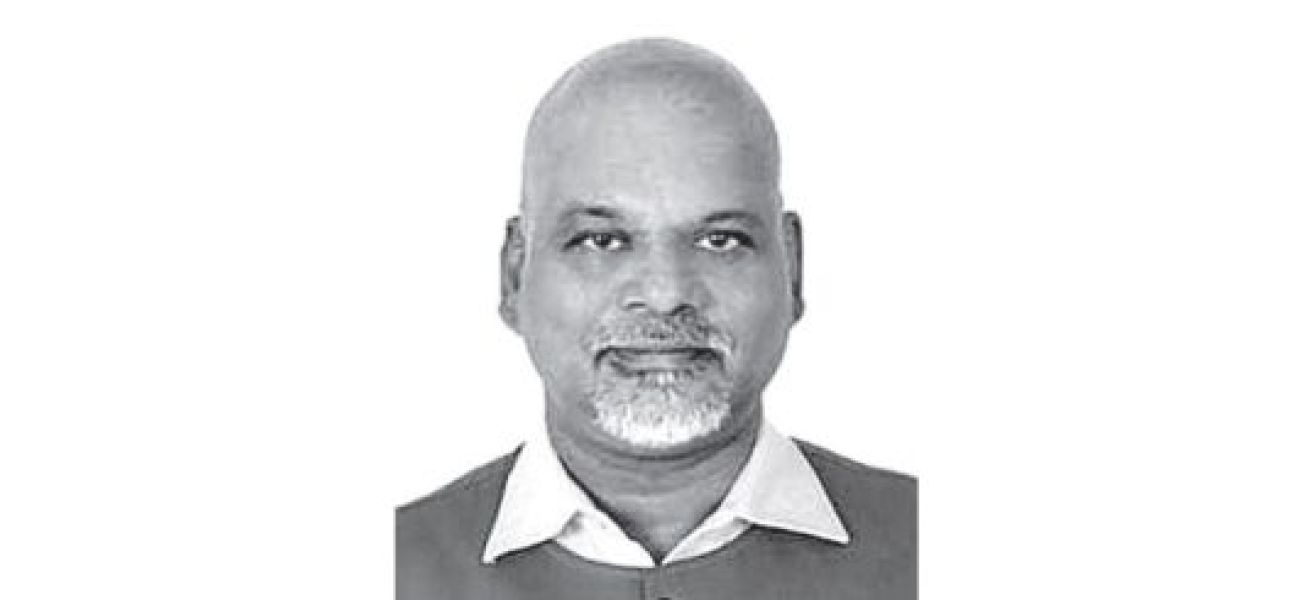
In conclusion, the writer, DK Giri, is a Professor of Practice at NIIS Group of Institutions and a contributor for Odisha Post, the leading English daily in Odisha.
[This article has been trending online recently and has been generated with AI. Your feed is customized.]
[Generative AI is experimental.]