


New Delhi, Feb. 1: Union Finance Minister Nirmala Sitharaman presented the Budget for the 9th time in the Lok Sabha today, with health, sports and defence sectors being given high priority in the Budget.
Focus on health
Finance Minister Nirmala Sitharaman made several important announcements related to the health sector. Three new Ayurvedic AIIMS will be opened in the country and five regional medical centres will also be set up. Ayurveda has gained global acceptance and recognition after the Covid-19 pandemic. She said that quality Ayurvedic products will help farmers who grow herbs and those who process the products.
District hospitals will be upgraded to provide better healthcare to the countrymen and five regional medical centres will be set up to promote medical tourism. The Prime Minister gave a collective global recognition when he took the ancient Indian yoga, which is already revered in several parts of the world, to the United Nations. After Covid, Ayurveda gained similar global recognition.
To meet the growing global demand, three new All India Ayurveda Institutes will be set up. AYUSH dispensaries and drug testing laboratories will be upgraded to higher standards for the certification ecosystem and more skilled staff will be recruited. Seven other rare disease medicines will be exempted from import for specific medical purposes, along with exemptions for 17 cancer medicines.
The WHO Global Centre for Traditional Medicine in Jamnagar, Gujarat will be upgraded to strengthen India's role in global traditional health systems. There are no national institutions for mental health care in North India. Hence, we will set up NIMHANS-2. The National Institutes of Mental Health in Ranchi and Tezpur will be upgraded to regional higher institutions. Emergency and trauma care centres in district hospitals will be set up to provide assistance in emergencies, especially to the poor and those facing unexpected expenses, said Nirmala Sitharaman.
Sports Sector Boost
The government's flagship Khelo India programme to find grassroots sports talent has been given a boost in the Budget. Nirmala Sitharaman proposed to launch the Khelo India Mission to focus on systematic development of training centres and coaches over the next decade.
For this, the central government will set up special training centres in various states. These centres will provide modern facilities and scientific training to the athletes. Players will be selected from school and college levels to provide them with the right guidance at an early age. These training centres will be developed to be useful for both practice and competition. The Khelo India programme was launched in 2017 and its primary objective was to conduct national-level competitions across age groups for talent identification.
In her Budget speech, she said that India has the potential to become a global hub for high-quality and affordable sports equipment and proposed a special scheme for production and research of quality sports equipment. The sports sector will reap several benefits under the Khelo India campaign. This will work towards transforming the sports sector by including holistic talent development, development of coaches and support staff, integration of sports science and technology, launching competitions and leagues to promote sports culture, development of sports infrastructure for competitions and training, etc. The Finance Minister said. India has the potential to emerge as a global hub for high-quality and affordable sports goods, the Finance Minister said.
Substantial funding for the Department of Defence
The Union Budget has allocated substantial funds for the Department of Defence, and the Union Government has taken several steps after Operation Sindoor.
In 2025-26, Rs 6.81 lakh crore was allocated for the armed forces, which is an increase of 9.2% from Rs 6.22 lakh crore in the previous year. In this year's Union Budget, the Indian military has been given Rs 2.19 lakh crore for modernization in the financial year 2026-27. This is an increase of 10%. 21.84 per cent increase. The capital expenditure budget of the Ministry of Defence in the financial year 2026 was Rs 1.8 lakh crore. Similarly, Rs 63,733 crore has been allocated for aircraft and aero engines. In addition, the budget allocation for Defence Services (Revenue), i.e. the part of the defence budget that is earmarked for day-to-day operations including recurrent expenditure like maintenance, ammunition, fuel, repairs etc. and salaries of support staff, has been increased by 17.24 per cent.
The allocation for pensions has been increased by 6.53 per cent to Rs 1.71 lakh crore. Overall, the defence budget has been increased to Rs 7.85 lakh crore.
Nirmala Sitharaman, in her speech, proposed to waive basic customs duty on raw materials imported for manufacturing of aircraft parts used in maintenance, repair or overhaul by defence sector units.
Seven high-speed trains Corridor
The Finance Minister has announced a total of seven projects across the country.
Mumbai-Pune, Hyderabad-Bengaluru, Delhi-Varanasi, Varanasi-Siliguri, Pune-Hyderabad, Hyderabad-Chennai, Chennai-Bengaluru These routes will connect major metropolitan cities with fast-growing urban and industrial hubs. They will significantly reduce travel time and reduce pressure on roads and conventional rail networks.
Nirmala Sitharaman announced a new dedicated East-West freight corridor connecting Dankuni in the east with Surat in the west. She also proposed the commissioning of 22 new national waterways in the next five years to promote multimodal transport and reduce logistics costs.
Tourism - Boosting medical centres
A series of initiatives aimed at expanding the economy by strengthening the tourism and hospitality sector were presented in today's Union Budget.
A pilot project to upskill 10,000 tourist guides in 20 prestigious destinations through a certified 12-week hybrid training programme in collaboration with the Indian Institute of Management has been announced.
The Finance Minister said that a National Destination Digital Knowledge Grid will be created to digitally document cultural, spiritual and heritage sites across the country.
The government will develop 15 archaeological sites including Lothal, Dholavira, Rakhigarhi, Adichanallur, Sarnath, Hastinapur and Leh Palace into vibrant, cultural destinations. Nirmala Sitharaman proposed the development of a well-connected integrated East Coast Industrial Corridor at Durgapur, creation of five tourism hubs in five northeastern states and deployment of 4,000 electric buses. She also announced plans to develop Buddhist circuits in Arunachal Pradesh, Sikkim, Assam, Manipur, Mizoram and Tripura, including temples and monasteries, and to set up interpretation centres. She said that eco-friendly mountain treks will be developed in key areas to promote sustainable tourism.
A National Hospitality Institute will be set up by revamping the National Council for Hotel Management and Catering Technology. In order to focus on connectivity, Nirmala Sitharaman proposed incentives for the production of seaplanes to improve access to last mile and remote areas and boost tourism. She announced a plan to support states in setting up five regional medical centres in partnership with the private sector.
4,000 crore for Self-reliant India Fund
A sum of Rs 4,000 crore will be provided to the Self-reliant India Fund in 2026-27 to support micro, small and medium enterprises. The fund was announced in 2023 to provide financial assistance of Rs 50,000 crore to MSAEs that have the potential and viability to grow into larger units. The minister proposed a combined textile programme with five sub-components in today's budget. She said this is a step that can help the sector, which is facing challenges due to the 50 per cent tariffs imposed by the US, and proposed to set up a Rs 10,000 crore fund to create small and medium enterprises to boost the economy.
Income Tax
The income tax has been continued as usual from April 1 without any change. A rule-based automated tax filing system will be implemented for small taxpayers. However, a penalty of 10 per cent will be imposed for late payment of income tax. Interest earned on motor vehicle accident compensation will be exempted from income tax.
Setting up of 15,000 new labs
Finance Minister Nirmala Sitharaman, in her 2026 Budget speech, proposed setting up of subject labs in 15,000 secondary schools to support the Indian Institute of Creative Technologies.
Help for women
Shi-Marts will be launched for self-help enterprises run by rural women. This will help in empowering women, she said. These will function as community-owned retail outlets run by self-help entrepreneurs.
The government wants to help women become owners of their own enterprises through credit-based livelihoods, she said.
Contribution to farmers
A bumper contribution has been made in the budget to increase the income of coastal farmers, mainly coconut, sandalwood, cashew and cocoa growers.
A special programme has been announced to increase crop productivity. The government aims to make Indian cashew and cocoa global premium brands by 2030. Assistance will be provided to modernize old plantations with low yields and introduce high-density farming. Special schemes have been launched to attract youth to expand the cultivation of walnuts, almonds and pine nuts. A multilingual agricultural toolkit has been announced in the budget to provide farmers with agricultural information, market rates and weather forecasts in their own language.
Aid for fisheries-animal husbandry
The government has proposed initiatives for the integrated development of 500 reservoirs and other water bodies to strengthen fisheries. These efforts will focus on improving market linkages and supporting smart cities, women-led groups and fish farmer producer organisations. For animal husbandry, a credit-linked subsidy programme will be introduced to promote entrepreneurship, modernise livestock enterprises and enhance integrated value chains in the dairy, poultry and livestock sectors. The government will encourage the formation of livestock farmer producer organisations to create quality employment in rural and urban areas.
Disclaimer: This article has been translated by xklsv.com using advanced AI-based translation tools. Please note that the use of AI for translation is still experimental and may not be 100% accurate. The original content is sourced from shakthidaily.info, and Shakthi Daily is not responsible or liable for any errors, omissions, or inaccuracies that may appear in the translated version, including spelling, grammar, or contextual misunderstandings.
If you come across any mistakes or inconsistencies in this translation, we kindly request you to report them by sending an email to [email protected].Your feedback will help us improve the quality of our translations
.jfif)
24 Athletes Chosen for District-Level Cross-Country Race ...
Read More.jfif)
Ganesha Festival Celebrations Across the District...
Read More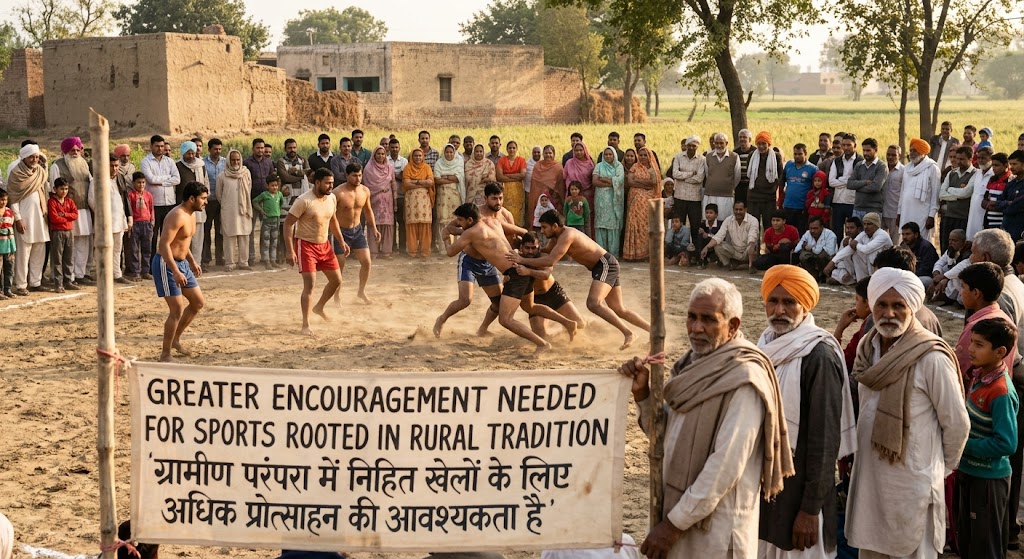
Greater Support Needed for Traditional Rural Sports ...
Read More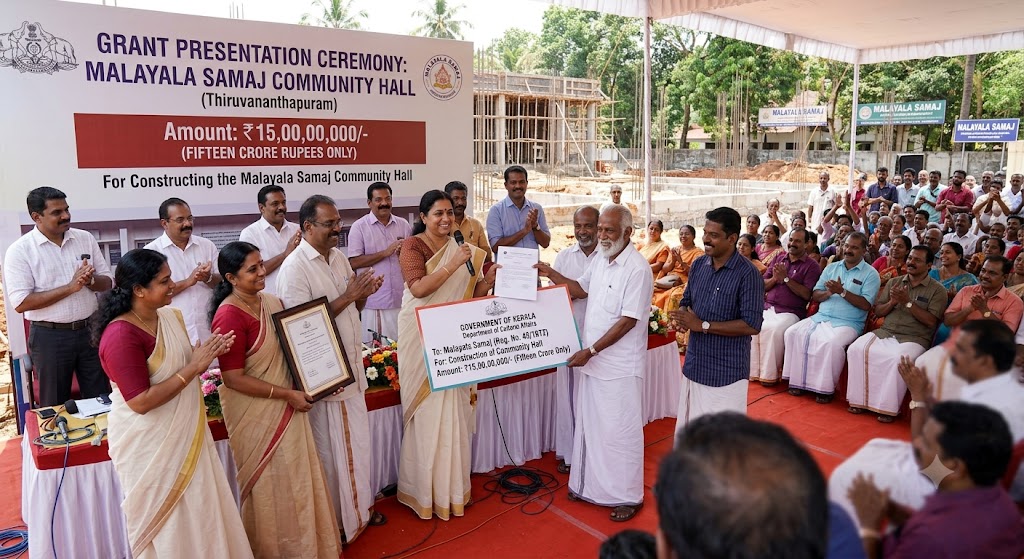
Grant Sanctioned for Malayala Samaj Community Hall Construction...
Read More