
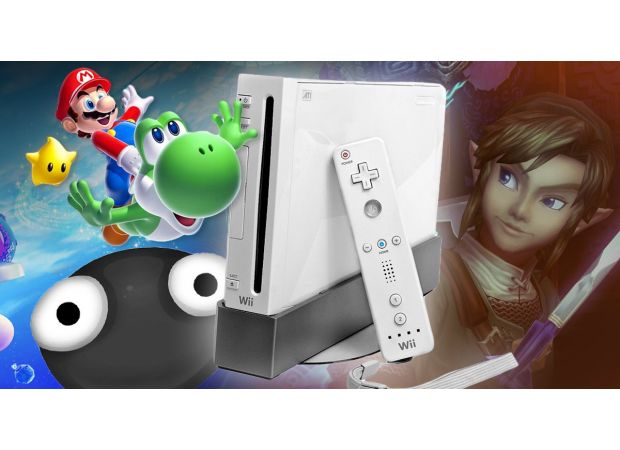

What are your fondest Wii memories? To mark the Wii’s 20th birthday, GameCentral looks back at how the console became such a success and ranks its best games. November 19 was the 20th anniversary of the Wii, which first launched in the US on that day in 2006.
It’s no exaggeration to say that it remains one of the most significant consoles in Nintendo’s history, even if it still carries a somewhat mixed reputation. Beyond its huge commercial success, the console lasted seven years and sold 101.63 million units. More importantly, it fundamentally changed the way Nintendo approached hardware design, and its influence can still be seen today in the Nintendo Switch.
So, to celebrate the Wii’s birthday, we’re taking a look back at its origins, its impact, and its best games, many of which still hold up remarkably well all these years later. The history of the Wii Although the GameCube is remembered fondly by many, it was nowhere near the success Nintendo had hoped for. If it weren’t for the Wii U, it would be Nintendo’s worst-performing console.
And while it was still profitable, it was outsold by the original Xbox and, especially, the PlayStation 2. There were several reasons for this, including a weak launch lineup, limited third-party support, and Nintendo’s image as a company that made games “for kids.” But the result was a major shift in strategy. Rather than chasing the hardcore gaming audience, Nintendo chose to go in the opposite direction and target a broader market — families and people who didn’t usually play games at all — while also offering a unique gimmick not found on competing hardware.
This move was heavily influenced by the success of the Nintendo DS and its dual screens. That led to the idea of creating a very simple controller, one that even your grandma could understand. The Wii Remote introduced motion controls and only a few buttons, letting players point and click through menus much like a TV remote.
At the time, Nintendo president Satoru Iwata made a point of showing just how compact the Wii was compared to other consoles. Originally codenamed Revolution, Nintendo eventually settled on the name Wii, because it sounds like “we” and was meant to emphasise that the console was for everyone. As expected, the name was mocked plenty.
Combined with Nintendo’s decision to ignore graphical power, focus on non-gamers, and continue battling the perception that it was a company only for children, many assumed the console was doomed. Clearly, that didn’t happen. The launch quickly proved the doubters wrong, and the Wii became the must-have Christmas gift of 2006, with demand far outstripping supply.
Thanks to Wii Sports, which was included for free, Nintendo successfully showed how the console could appeal to casual players and bring them into its ecosystem. At the same time, it also tried to keep core gamers happy with launch title The Legend Of Zelda: Twilight Princess, the latest entry in the acclaimed series, which went on to become the best-selling Zelda game ever. Nintendo wasn’t the inventor of motion controls in games, but it was the company that made them mainstream, thanks to the Wii Remote’s impressively accurate motion tracking.
There were stories after launch about people accidentally throwing their controllers into TVs, but because the Wii constantly warned players to keep the wrist strap on, this did little to damage its reputation. If anything, it worked too well, because the Wii’s success pushed Sony and Microsoft to add motion controls to their own systems. The PlayStation Move was an especially obvious Wii Remote copy, while the Kinect went fully hands-free, letting players use their bodies to control games.
Neither came close to matching the Wii’s popularity, and both have long since been abandoned. For Nintendo, the Wii proved that the company could no longer simply rely on making increasingly powerful consoles; every new system now needed a unique hook. The results after that were mixed.
The Nintendo 3DS, with its glasses-free 3D feature, was moderately successful, but the Wii U was a total failure due to poor marketing, not being enough of a technical leap, lacking the online features that had become standard, and its awkward GamePad controller. It was certainly novel, but the battery life was poor, and players never really warmed to constantly shifting their attention between the TV and the GamePad. There’s a reason all the Wii U’s best games were later ported to the Switch.
Nintendo could have played it safe and followed the Wii U with a much simpler console, but instead it stuck to its philosophy and bounced back with the Nintendo Switch, a hybrid home console and handheld. In many ways, the Switch is a better version of what the Wii U was trying to do, but it also owes its existence to the original Wii. Nintendo kept motion controls through the Switch’s Joy-Cons, which were explicitly designed as a more compact version of the Wii Remote.
The company also continued to aim for a broad audience rather than retreating to just the core gamer market. With family-friendly titles like Super Mario Party Jamboree and spiritual successors to Wii Sports and Wii Fit in Nintendo Switch Sports and Ring Fit Adventure, the Switch has become the go-to console for families — an audience Sony and Microsoft seem to have largely left behind. And just like the Wii, Nintendo’s gamble paid off.
In fact, it paid off even more, since the Switch became the company’s best-selling console and the second-best-selling console of all time, doing so well that Sony conveniently found a few extra PlayStation 2 sales to keep the top spot. It’s hard to say where Nintendo’s next move will lead, especially now that the Switch 2 appears to be more of a powerful hardware refresh than something truly radical. It does have some interesting ideas, especially its mouse controls, but some fans were disappointed by the lack of a bigger innovation.
Still, as we’ve already noted, the Wii remains clearly at the centre of Nintendo’s thinking even 20 years later. It was also one of the company’s best-selling consoles, proving that Nintendo’s hardware philosophy and game design approach could work brilliantly together. Whether deliberately or not, its influence will probably continue to be felt with the Switch 3, whether through innovative hardware or the kinds of games Nintendo makes for it.
The 14 best Nintendo Wii games Zack & Wiki: Quest For Barbaros’ Treasure We’ve mentioned Zack & Wiki before, including in our list of the best pirate video games, but it’s worth repeating that this Capcom oddity was one of the Wii’s finest exclusives, thanks to its inventive puzzles and charmingly quirky presentation. Capcom doesn’t often acknowledge the game, since it was a huge flop, but with the company becoming more experimental lately and revisiting forgotten franchises, a port for the Switch 2 would be very welcome. World Of Goo The Wii also introduced some wonderfully memorable indie games through its WiiWare service, and although that storefront is long gone, some of those titles are thankfully still available.
Among the highlights are the charming 2D platformer LostWinds and the Bit.Trip series of arcade rhythm games, each of which offered a different style of play and are now available on Switch through the Bit.Trip collection. What are your fondest Wii memories? To mark the Wii’s 20th birthday, GameCentral looks back at how the console became such a success and ranks its best games.
November 19 marked the 20th anniversary of the Wii, which first launched in the US on that day in 2006. It’s no exaggeration to say it’s one of the most significant consoles in Nintendo’s history, even if its reputation remains somewhat mixed. Beyond being hugely successful, remaining on the market for seven years and selling 101.63 million units, its success fundamentally changed Nintendo’s approach to hardware design.
Its influence is still being felt today, right through to the Nintendo Switch. So, to celebrate the Wii’s birthday, we’re taking a look back at its origins, its impact, and its best games, many of which still hold up remarkably well all these years later. The history of the Wii Although the GameCube is remembered fondly by many, it was a far cry from the success Nintendo had hoped for.
If it weren’t for the Wii U, it would stand as Nintendo’s worst-performing console. While it was still profitable, it was outsold by the original Xbox and, especially, the PlayStation 2. There were several reasons for this: a weak launch lineup, limited support from third-party publishers, and the perception that Nintendo was only for kids.
The result was a major shift in direction for the company. Instead of trying to win over hardcore gamers, Nintendo chose to move in the opposite direction and appeal to a wider audience: families and people who didn’t usually play games at all. It also wanted a unique gimmick that rival hardware didn’t have, inspired in part by the success of the Nintendo DS and its dual-screen design.
That led to the idea of making a very simple controller, one that even your grandma could understand. The Wii Remote introduced motion controls and just a few buttons, and navigating menus was as simple as pointing and clicking, much like a TV remote. Initially codenamed Revolution, Nintendo eventually settled on the name Wii because it sounds like “we,” emphasizing that the console was meant for everyone.
As expected, the name was mocked heavily, and along with Nintendo’s decision to downplay graphical power and target non-gamers, as well as the lingering belief that the company only made products for children, many people assumed the system was doomed. Clearly, that wasn’t the case. The Wii went on to become the must-have Christmas gift of 2006, with demand far exceeding supply.
Thanks to the included Wii Sports, Nintendo successfully showed how the console could appeal to casual players and bring them into its ecosystem. At the same time, it also tried to satisfy core fans with The Legend of Zelda: Twilight Princess, the latest entry in the acclaimed series, which would go on to become the best-selling Zelda game ever. While Nintendo didn’t invent motion controls in gaming, it certainly popularized them thanks to the Wii Remote’s impressively accurate tracking.
There were stories after launch of people accidentally throwing their controllers into TVs, but with the console frequently warning players to keep the wrist strap on, this did little damage to its reputation. If anything, it worked too well, because the Wii’s success pushed Sony and Microsoft to add motion controls to their own consoles. The PlayStation Move was a particularly obvious imitation of the Wii Remote, while the Kinect was entirely hands-free, letting players use their bodies to control games.
Neither came close to matching the Wii’s popularity, and both have long since been abandoned. For Nintendo, the Wii confirmed that it could no longer rely on simply making more powerful consoles. Every new system needed a distinctive hook.
The results that followed were mixed. The Nintendo 3DS, with its glasses-free 3D feature, was moderately successful, but the Wii U was a major failure due to poor marketing, too little of a technical leap, missing online features that had become standard, and the bulky GamePad controller. It was certainly an interesting idea, but the battery life was poor, and most players simply weren’t excited enough about having to look back and forth between the TV and the GamePad while playing.
There’s a reason so many of the Wii U’s best games ended up being ported to the Switch. Nintendo could have played it safe and made the Wii U’s successor a much simpler machine, but instead it stuck to its philosophy and returned to success with the Nintendo Switch, a hybrid home console and handheld. The Switch may be a better realization of what the Wii U was trying to do, but it also owes its existence to the original Wii.
Nintendo not only kept motion controls through the Joy-Cons, but designed them as a more compact evolution of the Wii Remote. The company also continued targeting a broad audience rather than retreating to the core gamer market. With family-friendly titles like Super Mario Party Jamboree and successors to Wii Sports and Wii Fit such as Nintendo Switch Sports and Ring Fit Adventure, the Switch has become the go-to console for families, an audience Sony and Microsoft seem to have largely left behind.
And just like the Wii, Nintendo’s gamble has paid off. In fact, it has done even better, with the Switch becoming Nintendo’s best-selling console and the second-best-selling console of all time, performing so well that Sony seemingly found a few extra PlayStation 2 sales to keep the top spot. It’s hard to say where Nintendo will go next, especially since the Switch 2 has mostly been a more powerful revision rather than something truly revolutionary.
It does have some interesting features, especially its mouse controls, but some Nintendo fans were disappointed by the lack of major innovation. Still, as we’ve seen, the Wii remains very much on Nintendo’s mind even 20 years later. It was one of the company’s best-selling consoles and proved the value of Nintendo’s approach to hardware and game design.
Whether intentionally or not, its influence will probably still be felt with the Switch 3, whether through innovative hardware or the kinds of games Nintendo creates for it. The 14 best Nintendo Wii games Zack & Wiki: Quest for Barbaros’ Treasure We’ve mentioned Zack & Wiki before, including in our list of the best pirate video games, but it’s worth repeating that this Capcom oddity was one of the Wii’s finest exclusives, thanks to its inventive puzzles and quirky style. Capcom doesn’t like to bring up the game, since it was a huge flop, but given the company’s recent interest in experimentation and reviving neglected franchises, a Switch 2 port would be very welcome.
World of Goo The Wii also introduced some wonderfully memorable indie games through its WiiWare service, and while that service is long gone, some of those games are thankfully still available. Standout examples include the charming 2D platformer LostWinds and the Bit.Trip series of arcade rhythm games, each of which offered a different style of play and is now available on Switch through the Bit.Trip collection.

To offset other income with business losses, you usually must materially participate. The 100-hour r...
Read More
Lives are about to be completely shattered....
Read More
BIMSTEC U23 Athletics Meet 2026 opens in Bhubaneswar; locals mark Chhadakhai and Boita Bandana festi...
Read More
Sharvari Wagh’s parents shared on Kon Honar Crorepati that she gets “hangry” while promoting h...
Read More