December 19th 2025.
Next year, the global economy is expected to grow at a rate of 3.1%, which is almost identical to this year's growth. To some onlookers, this consistency may seem like a world economy that is simply coasting along, neither slowing down nor speeding up. However, the stability that is reflected in this headline figure is not a result of complacency, but rather a quiet rebalancing that is reshaping the way global savings and investment interact.
The latest Capital Flows Report from the Institute of International Finance highlights this shift in growth patterns. The United States, after a period of strong post-pandemic growth, is now cooling down. On the other hand, Europe and Japan, traditionally seen as weaker players, have found more solid ground. While China's economic growth continues to slow down, countries like India and other Asian economies are experiencing faster growth rates. Overall, emerging markets are still growing at a healthy rate of 4.2% per year, but the specific countries that are leading this growth have changed significantly.
In essence, the engines of the world economy are turning, but not all in the same direction. This redistribution of weight is most evident in the movement of capital. In 2025, nonresident flows into emerging markets hit a record high of $1.18 trillion, well above the historical average. However, this surge is not the beginning of a financial boom. Much of this strength is due to bank-related flows, official financing, and balance-sheet rebuilding in parts of Europe and Asia. As these temporary drivers taper off, flows are projected to decrease to around $1.13 trillion in 2026, which should be seen as a normalization rather than a retreat. When put into perspective, the ratio of nonresident flows to emerging-market GDP is expected to decrease from 2.6% in 2025 to 2.3% in 2026. While this may be below pre-pandemic levels, it is important to note that this headline number is distorted by the significant drop in inward flows to China. In fact, when China is excluded, all other emerging markets are absorbing capital at a similar pace as they were in the mid-2010s. Therefore, the softness in the aggregate number is primarily due to the weight of China, rather than a broader weakening of emerging-market fundamentals. What really matters is the direction in which flows are moving. Capital is now shifting away from China and towards emerging markets that offer stable policy frameworks, resilient domestic demand, and attractive investment opportunities.
This realignment of global capital is evident in several Asian economies that are seeing an increase in foreign direct investment and portfolio flows. Emerging Europe is also experiencing a recovery after a turbulent period. Latin America is stabilizing across a variety of external indicators, and certain commodity importers are starting to attract more capital. While these changes may not be dramatic, they do reflect a world in which capital is being allocated more selectively compared to the liquidity-heavy decade that followed the 2008 global financial crisis. China's evolving role is at the center of this new landscape.
China remains the largest source of external savings among emerging markets, with a current-account surplus of $500 to $700 billion. However, the way that this surplus is being recycled has shifted. Rather than being channeled through the People's Bank of China's reserves, a growing portion is now being invested outward by firms, banks, and households. This means that China has become a structural exporter of capital, which helps to explain why global reserve accumulation has remained modest despite a weaker US dollar. China's savings are increasingly supporting investment in other parts of Asia, Africa, and the Middle East, rather than flowing back into traditional reserve channels. Another notable change is in external balances. Asia, excluding China, has become a major surplus center. Vietnam continues to attract foreign direct investment at a consistent rate, India is able to finance its deficit without difficulty due to strong services exports, and countries like South Korea and Malaysia have benefited from the global tech upswing and the strength of their information and communication technology service sectors. In contrast, commodity exporters are now directing more resources towards domestic development. For example, Saudi Arabia's external surplus has decreased as it invests heavily in logistics, manufacturing, and non-oil sectors. Latin America's external balance is generally stable, while emerging Europe is seeing a mix of both surplus and deficit.
Finally, several African economies are slowly regaining access to international markets as they implement domestic reforms that strengthen their macro frameworks. These shifts may seem subtle, but they represent a significant change in global imbalances. Surpluses are now concentrating in certain parts of Asia, while commodity exporters are focusing more on domestic growth. Many emerging markets are also managing their external accounts more effectively. At the same time, technology is playing a crucial role in reshaping the global economy. The rapid expansion of artificial intelligence computing capacity has already made a visible impact on US GDP, and these capital-intensive, energy-intensive, globally interconnected investments are beginning to influence where global savings flow and where production capacity expands.
The few emerging economies that have a combination of domestic digital capabilities and strong exports of information and communication technology services are likely to lead the next phase of digital investment. However, their level of participation will depend not only on their macro stability and regulatory clarity, but also on their reserves of reliable energy and skilled labor. These changes are happening in the midst of familiar risks. The US fiscal outlook is still uncertain, and China's domestic demand remains weak as its property market continues to correct. Geopolitical tensions in the Middle East and disruptions in key shipping routes have resulted in increased costs and disrupted trade. Additionally, the rapid growth of AI presents new measurement challenges as intangible investments become more prevalent. However, the global economy has been able to absorb these pressures through exchange-rate adjustments and changes in portfolio allocation, rather than sudden stops or external crises. This resilience is not a coincidence, but rather a result of the underlying changes in capital flows. This can be seen in the value of the US dollar, which has weakened against most emerging-market currencies in 2025 as US growth has slowed down. However, this weakening has been gradual and orderly, and several emerging-market currencies are still undervalued even after appreciating. The Institute of International Finance's baseline scenario for 2026 is that the dollar will remain relatively stable, with a slight softening. The cost of hedging has decreased, and local-currency markets have become more established. Adjustments are now being made through foreign-exchange channels, rather than through reserve accumulation, which indicates a healthier global equilibrium compared to the one that emerged immediately after the pandemic. Therefore, it is clear that the world economy is not simply drifting along, but rather undergoing a significant rebalancing. While growth remains steady, the global composition has changed, and capital flows continue to be strong, but through different channels. With technology reshaping the map of comparative advantage, policymakers must recognize the underlying structural changes that will shape the world economy in the coming decade.
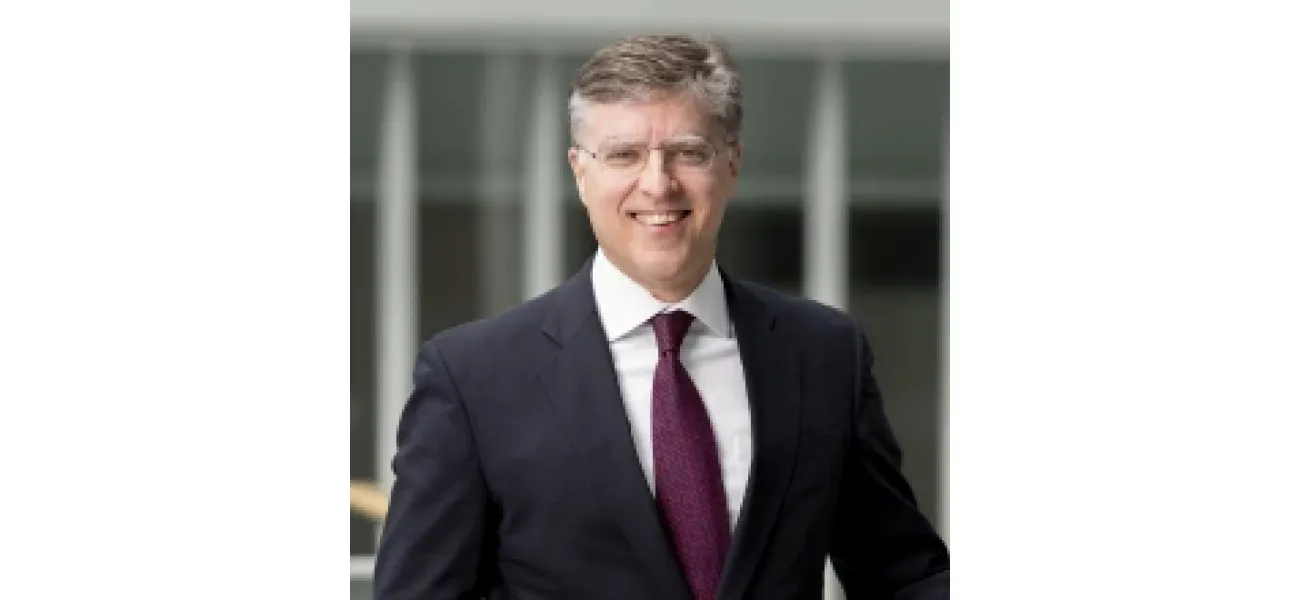
The author, Marcello Estevão, is a professor at Georgetown University.
[This article has been trending online recently and has been generated with AI. Your feed is customized.]
[Generative AI is experimental.]