December 4th 2025.
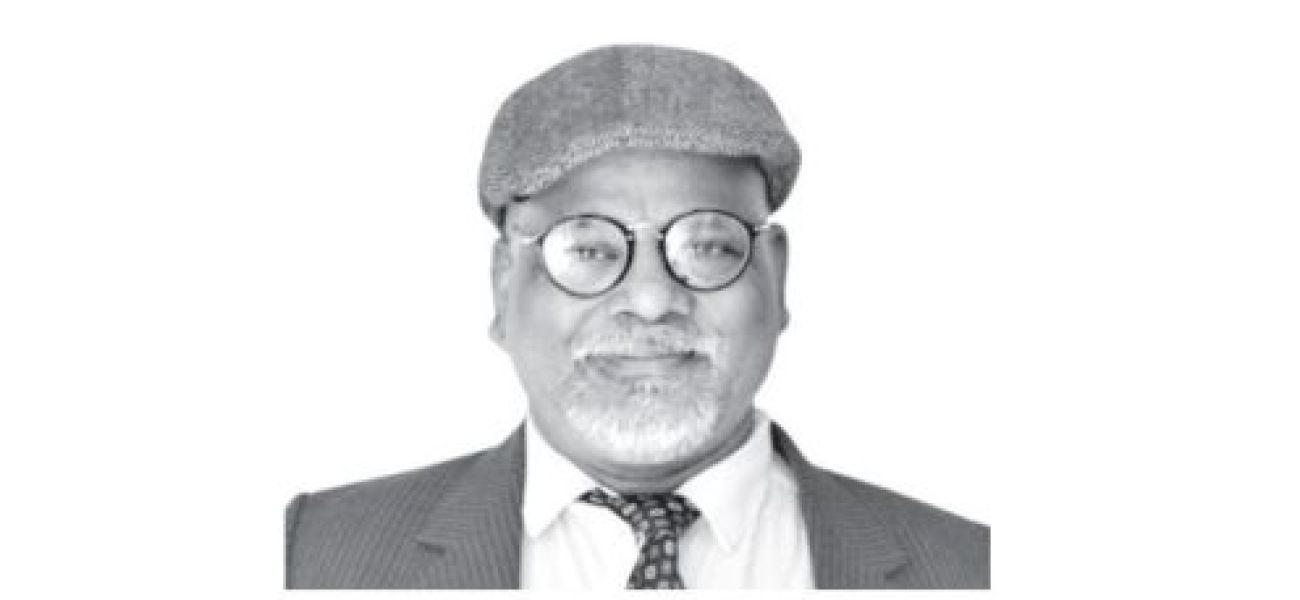
Renowned journalist DK Giri reports that the highly anticipated visit of Russian President Vladimir Putin to India has caught the attention of world leaders for two reasons. First, Russia has been embroiled in a fierce conflict in Ukraine since 2022. While peace talks are currently underway, Putin recently issued a threat to Ukraine, giving them an ultimatum to "roll back or be ready to be wiped out." Secondly, there have been efforts by the United States to end the war.
An op-ed published in a leading Indian newspaper titled "World wants the Ukraine war to end, but Russia does not seem serious about peace" has been making waves. It was written by Philipp Ackermann, Thierry Mathou, and Lindy Cameron, who are the Ambassadors of Germany, France, and the British High Commissioner respectively. In the article, they accused Russia of waging an unprovoked war on Ukraine and violating fundamental international principles of national sovereignty and territorial integrity. They also suggested that Russia's actions are driven by a desire for territorial expansion and global destabilization, extending beyond just Ukraine.
The article concludes with a reaffirmation of their countries' unwavering commitment to supporting Ukraine through both military and non-military means. In response, the Ministry of External Affairs issued a mild statement condemning the publication of such articles on the eve of a foreign dignitary's visit to India, calling it an "unusual and unacceptable diplomatic practice."
The United States has been highly critical of India's purchase of Russian oil, with President Donald Trump imposing additional tariffs on Indian exports. As a result, India's purchase of Russian crude oil has decreased since last August and is expected to hit a record low in December.
As Putin prepares for his two-day visit to India on 4-5 December, many wonder what his intentions are and what he hopes to achieve. There are also questions about how India will navigate its foreign policy while deepening its ties with Russia. Some analysts believe that the visit will strengthen ties and lead to closer collaboration, while others, including myself, remain skeptical of Russia's true intentions and the current partnership.
In an attempt to read between the lines of two statements made by Putin and his spokesperson Dimitry Peskov, it is clear that Russia is eager to address India's concerns about the trade deficit and is willing to ensure their right to sell oil to India. However, what raises concerns among analysts and strategists is Putin's statement about elevating cooperation with India and China to "qualitative new levels." This suggests a potential troika between India, Russia, and China, which could mark a significant shift in India's foreign policy. Historically, India has maintained a steady growth in its bilateral relationship with the United States, but due to recent tensions with President Trump, some believe that India may be moving closer to Russia and China. It remains to be seen whether Prime Minister Narendra Modi will be able to balance relationships with both rival blocs, but it is expected to be a difficult and complex task. Ultimately, India will have to choose one over the other.
During the visit, Putin and Modi will co-chair the 23rd India-Russian annual bilateral Summit. The discussions will cover a range of topics such as trade, defense, energy, politics, economics, science, and people-to-people ties. India is also expected to request the safe return of Indian nationals recruited in the Russian military.
Another significant agreement that is expected to be signed is one that will allow skilled and semi-skilled Indian professionals to work in Russia. This is a crucial deal as Russia is currently facing a shortage of manpower in various sectors. Formal negotiations for this agreement began in August 2025 when the Terms of Reference were signed.
On the agenda is also a discussion about a Free Trade Agreement with the Euro-Asian Economic Union, which includes Russia, Armenia, Belarus, Kazakhstan, and Kyrgyzstan. The goal is to reach a bilateral trade of $100 billion by 2030. Currently, India has a significant trade deficit with the EAEU, mainly due to its heavy imports of Russian oil.
The world is closely watching the discussions between Putin and Modi regarding the ongoing conflict in Ukraine. It remains to be seen if Ukraine will be mentioned in the joint communiqué made by the two leaders, which could have significant implications for India. If it is not mentioned, India may face criticism from Western powers.
As we wait for the outcome of this visit, it is clear that it holds great significance for both India and Russia. The writer, Professor of Practice at NIIS Group of Institutions, encourages us to keep a close eye on the developments and see how they unfold. He also reminds us that Orissa POST is Odisha's No.1 English daily, bringing us the most up-to-date news and insights from around the world.
[This article has been trending online recently and has been generated with AI. Your feed is customized.]
[Generative AI is experimental.]