

For anyone serious about cracking the Civil Services Examination, building a Daily UPSC Quiz around Indian Physical Geography is one of the sharpest moves you can make. Geography isn't a peripheral topic in UPSC — it cuts across Prelims and Mains, and a strong command over India's physical landscape can meaningfully shift your final score.
Physical geography isn't just a chapter to get through — it's the foundation that holds up much of the broader UPSC syllabus. Monsoon patterns tie directly into agriculture and rural economy. Tectonic activity informs disaster management policy. Coastal geography shapes environmental debates. UPSC examiners consistently design questions that reward candidates who can connect geographical knowledge to real administrative and policy contexts, not just those who've memorised textbook definitions.
Physiographic Divisions of India India is broadly divided into six physiographic zones — the Himalayan Mountains, the Northern Plains, the Peninsular Plateau, the Indian Desert, the Coastal Plains, and the Island Groups. Each has distinct characteristics, and questions drawn from these divisions appear across both objective and descriptive papers.
River Systems and Drainage Patterns The Himalayan rivers — the Ganga, Brahmaputra, and Indus — and the Peninsular rivers — the Godavari, Krishna, and Cauvery — differ considerably in origin, flow behaviour, and seasonal patterns. Inter-river linking projects and water-sharing disputes between states are recurring exam themes tied to this topic.
Climate and the Monsoon System A thorough understanding of the South-West and North-East monsoons — their origin, progression, and retreat — is essential. Extend this further to include phenomena like El Niño, La Niña, and the Indian Ocean Dipole, all of which now feature regularly in the expanded UPSC syllabus.
Soils and Natural Vegetation From alluvial and black cotton soils to laterite and desert soils, India's soil diversity is wide and exam-relevant. Pair this with knowledge of vegetation types — tropical rainforests, deciduous forests, scrublands — and you'll find strong overlaps with ecology and agriculture questions as well.
Seismic Zones and Disaster Vulnerability India's earthquake-prone regions, tsunami-vulnerable coastlines, and flood-prone plains appear frequently in questions on disaster risk reduction, climate resilience, and governance. Knowing the seismic zone map is a small investment with outsized returns.
Practising a Daily UPSC Quiz on geography does more than test what you know — it actively builds what you know. Regular quizzes sharpen both speed and accuracy, both of which are critical during Prelims where every second counts. More importantly, active recall through quizzes embeds information far more effectively than passive rereading. They also expose you to the range of question formats and angles UPSC favours, and quickly surface the weak spots that need targeted revision before they cost you marks.
Always ground geographical features in current events and government schemes — this is exactly how UPSC frames its trickier questions. Start with NCERT textbooks from Class 6 through 12 before moving to advanced references; the conceptual clarity they provide is irreplaceable. Make map work a daily habit — labelling rivers, mountain passes, plateaus, and soil zones on a blank map builds the kind of visual memory that sticks under exam pressure. Finally, revisit previous years' UPSC questions regularly to understand the depth and framing the exam consistently demands.
Indian Physical Geography is a high-yield topic that rewards structured, consistent effort. Whether you're just starting out or deep into your preparation, weaving a daily geography quiz into your routine will steadily sharpen both your confidence and your competence. Make it a strength — and let every quiz session close the distance between where you are and where you want to be.

Alcohol Sales Decline as Beer Consumption Rises...
Read More
Madikeri Dasara Begins with Traditional Karaga Deity Puja...
Read More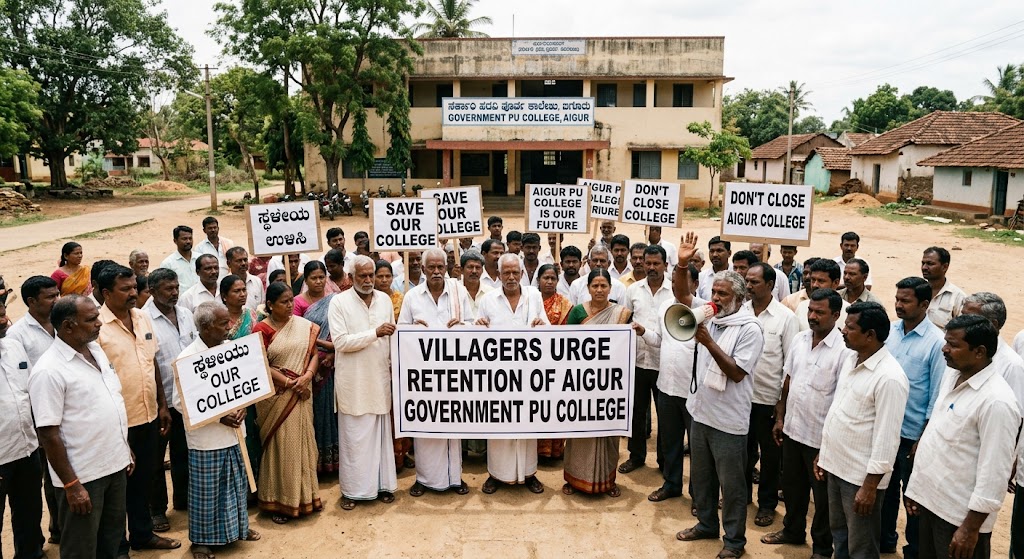
Villagers Demand Retention of Aigur Government PU College...
Read More