
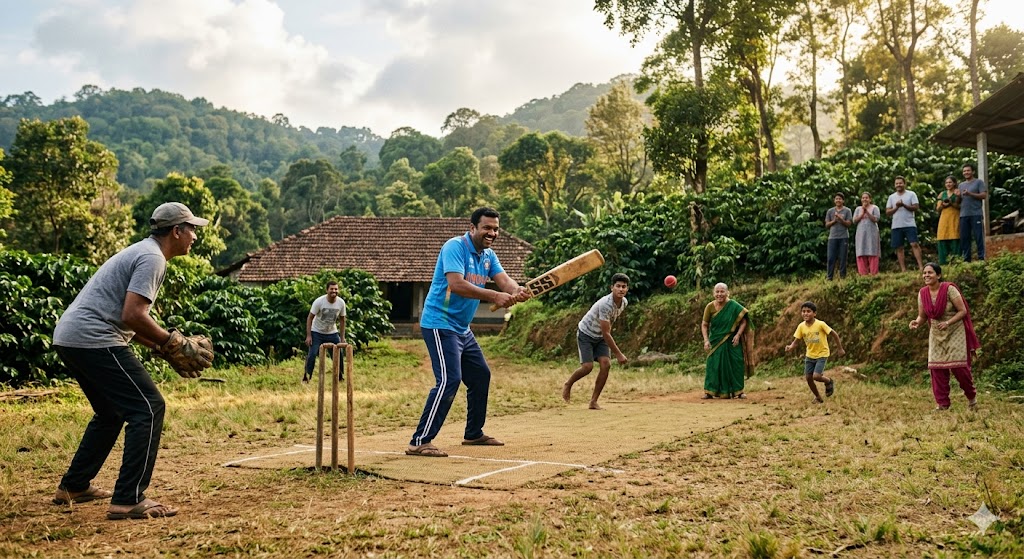

Madikeri, May 11; The Kudupaje, Podanolana and Chalangaru family teams have entered the next stage of the Kudupaje-2026 cricket tournament being held by the Kodagu Gowda Yuva Vedike among Gowda families of ten families and eighteen gotras.
In the tournament held today, the Nidyamale team scored 57 runs for 3 wickets in the stipulated 5 overs, while the Cherukana team lost 5 wickets and scored 38 runs. The Chalangaru team scored 64 runs for 1 wicket, while the Dambekodi A team lost 4 wickets and scored only 51 runs.
In another match, the Chalangaru team scored 64 runs for 3 wickets, while the Palaru Gundya team lost 6 wickets and scored only 34 runs. Podanola's team scored 64 runs for 3 wickets, while Kumbagouda's team lost 3 wickets and scored only 34 runs. Nidyamale's team scored 46 runs for 4 wickets, while Chalangaru's team reached the target with the loss of 2 wickets. Pore's team scored 51 runs for 1 wicket, while Kudupaje A team reached the target with the loss of 2 wickets. In another match, Podanola's team scored a whopping 101 runs without losing any wickets. In reply, Kanadka team lost 5 wickets and scored only 34 runs, losing by 67 runs. Kodi's team scored 43 runs for 1 wicket, while Kudupaje team reached the target with the loss of 2 wickets.
Disclaimer: This article has been translated by xklsv.com using advanced AI-based translation tools. Please note that the use of AI for translation is still experimental and may not be 100% accurate. The original content is sourced from shakthidaily.info, and Shakthi Daily is not responsible or liable for any errors, omissions, or inaccuracies that may appear in the translated version, including spelling, grammar, or contextual misunderstandings.
If you come across any mistakes or inconsistencies in this translation, we kindly request you to report them by sending an email to [email protected]
Your feedback will help us improve the quality.
The image in this article has been generated using artificial intelligence and is intended for illustrative purposes only. It may not reflect real-world accuracy.
.jfif)
Gauri-Ganesha Idol Immersion Held at Koothi ...
Read More.jfif)
