
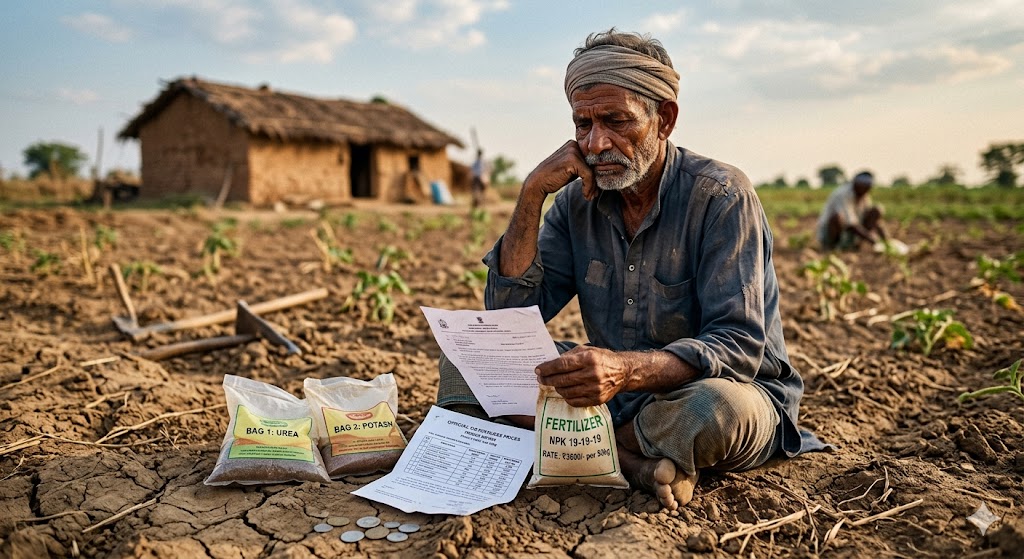

Srimangala, June 12: For the second consecutive year, fertilizer prices have increased again during the monsoon season, and farmers have to bear a heavy burden through the increase in fertilizer prices. The increase in fertilizer prices will further increase the production costs of the crops grown by farmers, and the amount of profit they receive will decrease.
The farming community dependent on agricultural and horticultural crops, which is suffering from several problems including extreme weather conditions, market instability, price decline, unscientific marketing, brokers' attacks, wildlife attacks, labor shortage, increase in labor wages, reduction in labor hours and lack of skills among the available laborers, and wildlife attacks, is now again suffering due to the sharp increase in fertilizer prices before the monsoon.
The use of fertilizers has become inevitable due to the necessity of providing nutrients to crops before the monsoon. But nitrogen, phosphorus, potash fertilizers have seen a huge increase, along with light nutrient fertilizers.
Fertilizer 20 :20: 0:13 has now increased from Rs. 1,450 to 800, an increase of Rs. 350 per bag. Similarly, 15 :15:15 complex fertilizer has increased from Rs. 1,650 to 1,950, an increase of Rs. 300 per bag.
Similarly, another popular complex fertilizer 19: 19:19 complete has increased from Rs. 1,800 to 2,300, an increase of Rs. 500 per bag. Similarly, 16 :16: complex fertilizer has increased from Rs. 1,475 to 2,250, an increase of Rs. 775 per bag. MOP potash fertilizer, which plays an important role in protecting crops from diseases and grain setting, has been increased from Rs. 1,600 to Rs. 2,000, an increase of Rs. 400 per bag. Popular IFFCO company's 10:26:26 and DAP fertilizers are in short supply at most places. Urea fertilizer has been increased from Rs. 267 to Rs. 290, or Rs. 23 per bag.
Urea fertilizer has been limited to one bag of 45 kg per acre by FID. Since urea fertilizer is limited to one bag per acre, it is not possible for farmers to mix nitrogen, phosphorus and potash separately.
This has reduced the demand for phosphorus-rich single super phosphate and triple super phosphate and rock phosphate fertilizers.
Since urea fertilizer has been limited to one bag per acre, most farmers are now forced to rely on complex fertilizers, even though they are expensive. An alternative to urea fertilizer is ammonium sulfate fertilizer, which costs Rs. 950 per bag and requires two bags of ammonium sulfate to meet the nutrient requirement of urea. Due to this, farmers are facing difficulties in using ammonium sulfate. DAP (Di ammonium phosphate) fertilizer contains 18% nitrogen and 48% phosphorus. Since DAP fertilizers are not available to reduce the amount of urea, this option is not available to farmers.
In many places, old fertilizer stocks are available and it has to be given at the old price.
In some places, it is being sold at the new price, and farmers who buy fertilizer should be careful and check the maximum selling price on the bag and be careful when buying, said the farmer leaders. According to the law, it is not possible to sell more than the maximum selling price. Therefore, it is possible to sell at a price lower than the maximum selling price mentioned on the bag, but if a higher price is charged, a complaint can be made to the agricultural authorities by getting a receipt. In addition, the price of copper sulphate, which is used for spraying coffee, pepper and areca nuts to control rot diseases, has also increased drastically. Last year, during the monsoon, the price was 300 to 320 per kg. It has now increased to 500 to 540. This is again a burden on the farmers, and the farmers and growers are becoming poor after hearing the new price.
Disclaimer: This article has been translated by xklsv.com using advanced AI-based translation tools. Please note that the use of AI for translation is still experimental and may not be 100% accurate. The original content is sourced from shakthidaily.info, and Shakthi Daily is not responsible or liable for any errors, omissions, or inaccuracies that may appear in the translated version, including spelling, grammar, or contextual misunderstandings.
If you come across any mistakes or inconsistencies in this translation, we kindly request you to report them by sending an email to [email protected]
Your feedback will help us improve the quality.
The image in this article has been generated using artificial intelligence and is intended for illustrative purposes only. It may not reflect real-world accuracy.

Sports Events Strengthen Team Spirit and Camaraderie...
Read More.jfif)
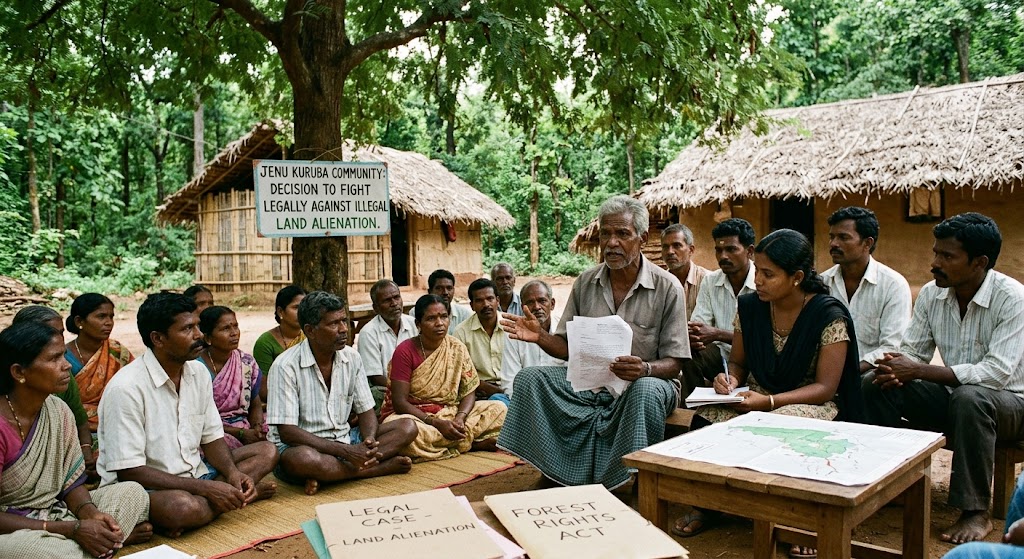
Jenu Kuruba Community to Pursue Legal Action Against Illegal Land Alienation...
Read More.jfif)
**Depiction of the Slaying of Mahishi by Manikantha**...
Read More