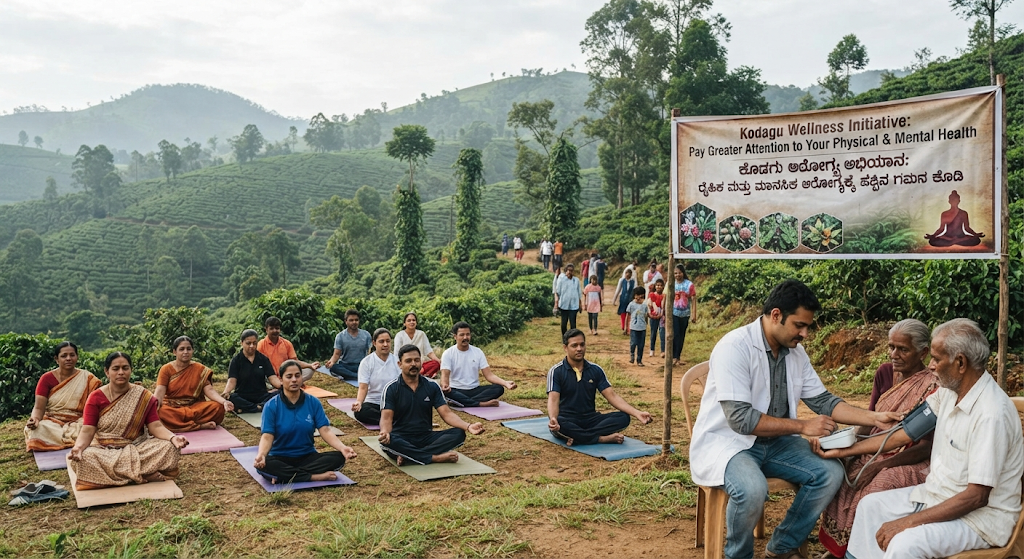
.jfif)

Among the Kodava people—who follow a tradition of nature worship—rituals and observances rooted in agriculture hold a central place. It is characteristic of this folk culture to perceive divinity in every aspect of life. They recognize the presence of the Divine in the *Pancha Bhoutas* (the five elemental forces), in the subtle essence of Mother Earth, and even in *anna* (rice/grain), which is the very foundation of life. When the paddy—cultivated through ploughing and sowing—reaches fruition, they welcome the harvest with great jubilation and bring it into their homes. The Puthari festival is a celebration rooted in this tradition. The term 'Puthari' is derived from two Kodava words: 'Puttha' and 'Ari'. 'Puttha' means 'new', while 'Ari' refers to a sheaf of paddy. Thus, Puthari is essentially the festival of bringing the new harvest (paddy) into the home. A festival is a culmination of various beliefs and practices; the observance of Puthari is intrinsically linked to Igguthappa—the deity of the hills, the provider of grain, and the god of rain. The process of determining the date and auspicious timing (*muhoortha*) for the Puthari festival—known as *Namme Kuripa*—takes place at the Padi Igguthappa Temple. This task is performed by the *Kaniya* (astrologer/ritual specialist) from Ammangeri, in the presence of the *Takka* (the traditional head/custodian) of the temple. With this, the formal customs and protocols of the festival commence. The Puthari festival is generally celebrated on the full moon day in the month of Vrishchika (Scorpio), coinciding with the Rohini Nakshatra. The timing of this specific star is considered paramount, regardless of whether the paddy ears have fully matured or not; consequently, the festival sometimes falls in the month of November. Since the occasion involves bringing home green, milk-filled ears of paddy, it is referred to as 'Pacche Puthari' (Green Puthari). As the festival approaches, every household, the village temple, and the *mand*s (communal gathering spaces) are thoroughly cleaned and decorated with a fresh coat of whitewash or paint. Traditionally, artisans and craftsmen would supply the village community with the various items required for the festival—such as bamboo poles (*kutthi*), pots, mats, and baskets.
Disclaimer: This article has been translated by xklsv.com using advanced AI-based translation tools. Please note that the use of AI for translation is still experimental and may not be 100% accurate. The original content is sourced from shakthidaily.info, and Shakthi Daily is not responsible or liable for any errors, omissions, or inaccuracies that may appear in the translated version, including spelling, grammar, or contextual misunderstandings.
If you come across any mistakes or inconsistencies in this translation, we kindly request you to report them by sending an email to [email protected]
Your feedback will help us improve the quality.
The image in this article has been generated using artificial intelligence and is intended for illustrative purposes only. It may not reflect real-world accuracy.
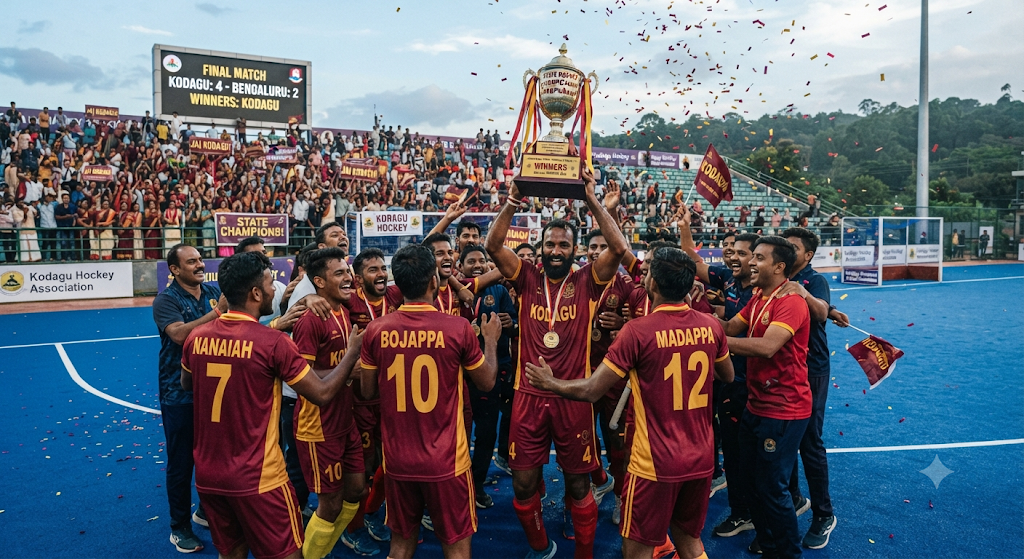
**Kodagu Team Clinches Championship at State-Level Hockey Tournament**...
Read More
P. Ravindran Re-elected as Kerala Samajam President...
Read More